List of Ziyarat in Iraq & Iran

Home / Places of Ziyarat

KufaPhoto to be added

Kufa — Iraq

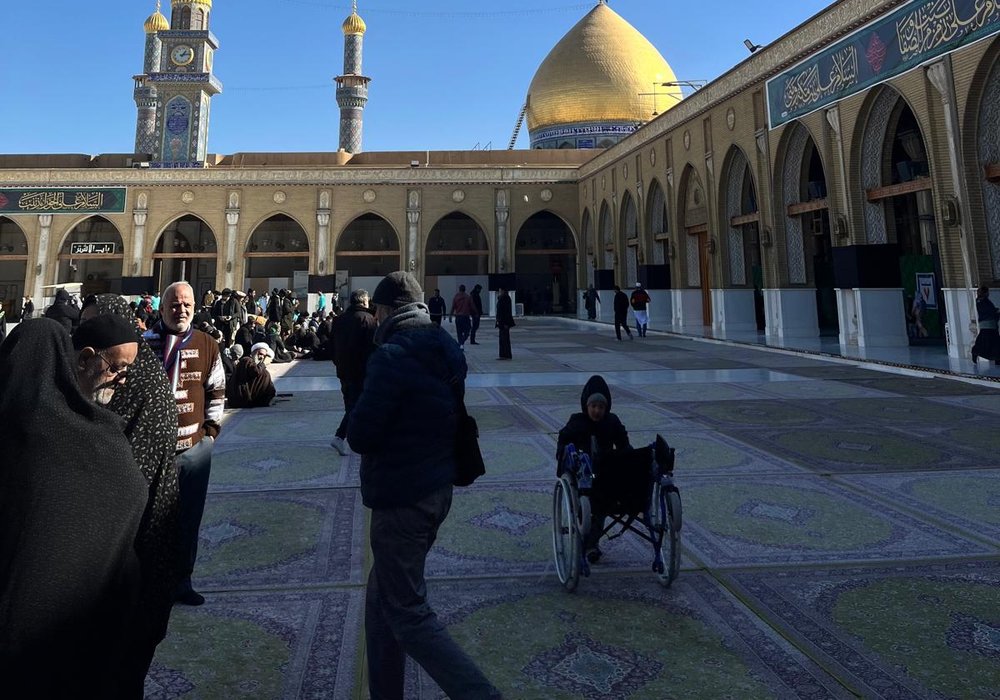
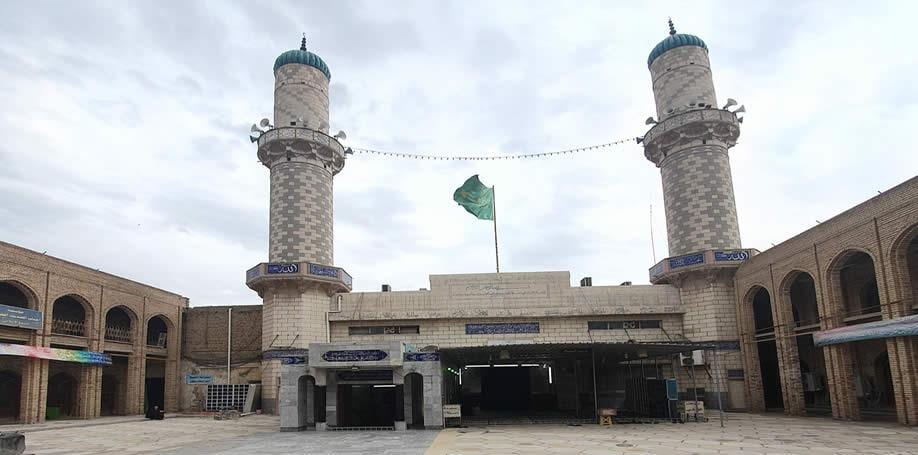
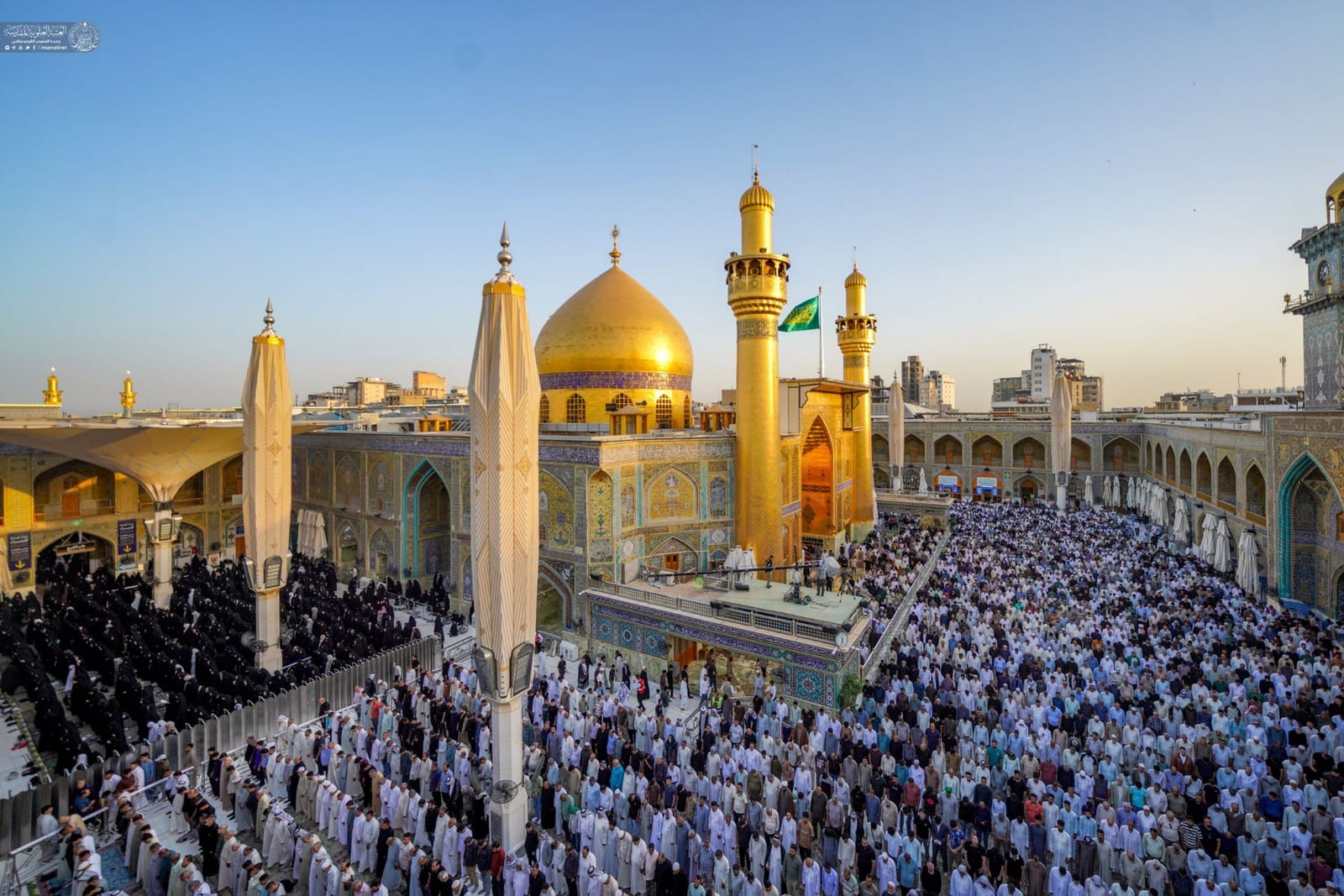
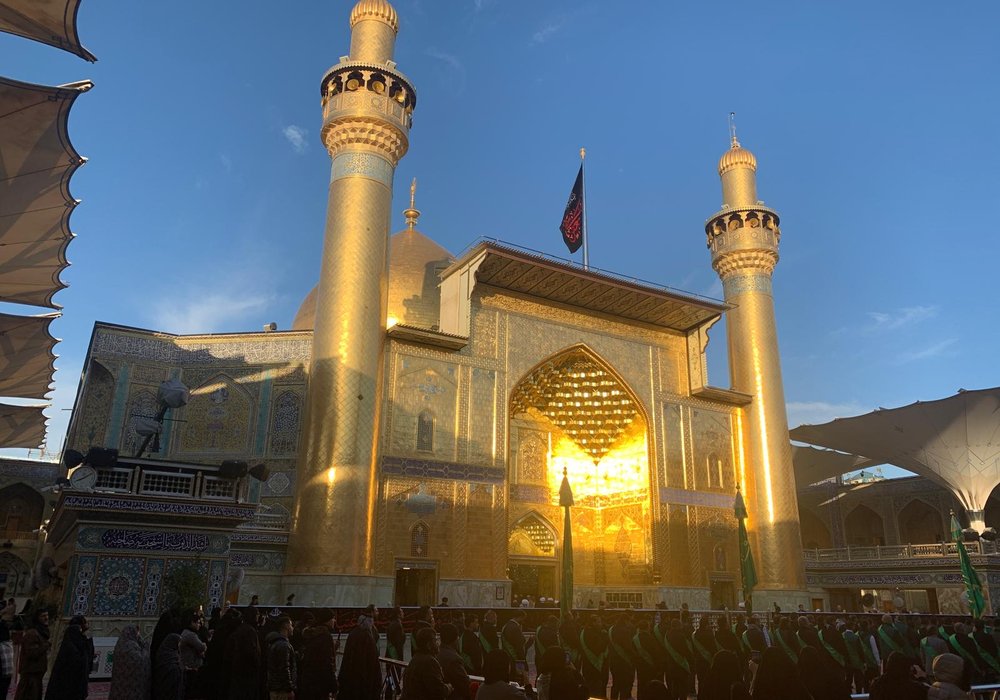
Home to the historic Masjid-e-Kufa and Masjid-e-Sahla, along with the tombs of several companions of Imam Ali (a.s.).

  1. Masjid-e-Kufa — resting place of Hazrat Muslim bin Akeel (a.s.) and Janabe Hani
  2. House of Imam Ali (a.s.) near Masjid-e-Kufa
  3. Masjid-e-Sahla
  4. Tomb of Hadrat Kumayl, companion of Imam Ali (a.s.)
  5. Tomb of Hazrat Meesum Al Tammar
  6. Masjid Hannana, between Kufa and Najaf
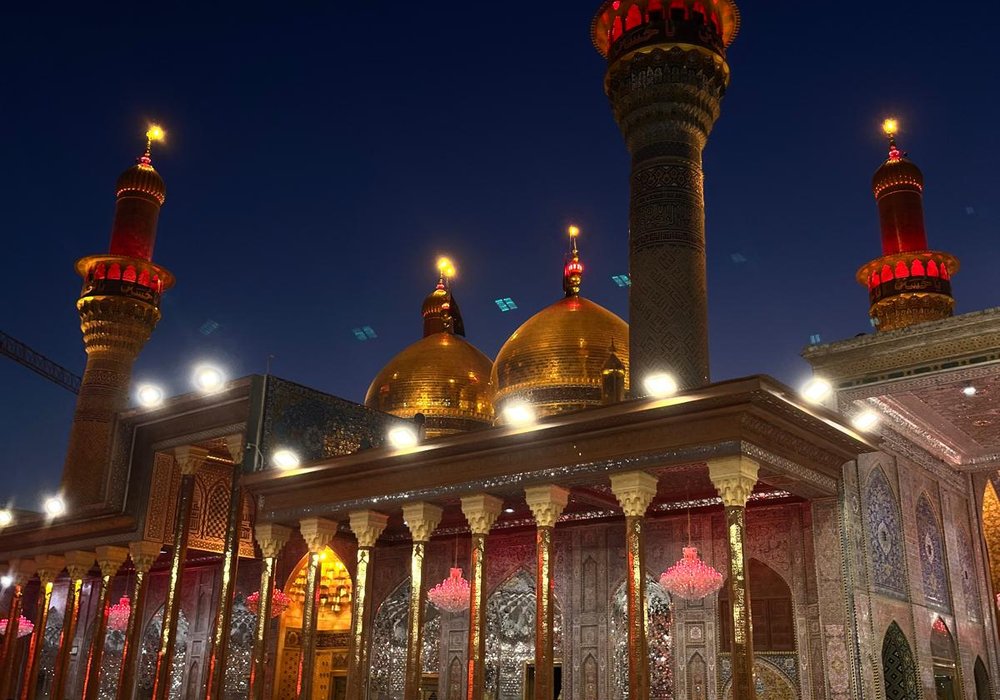
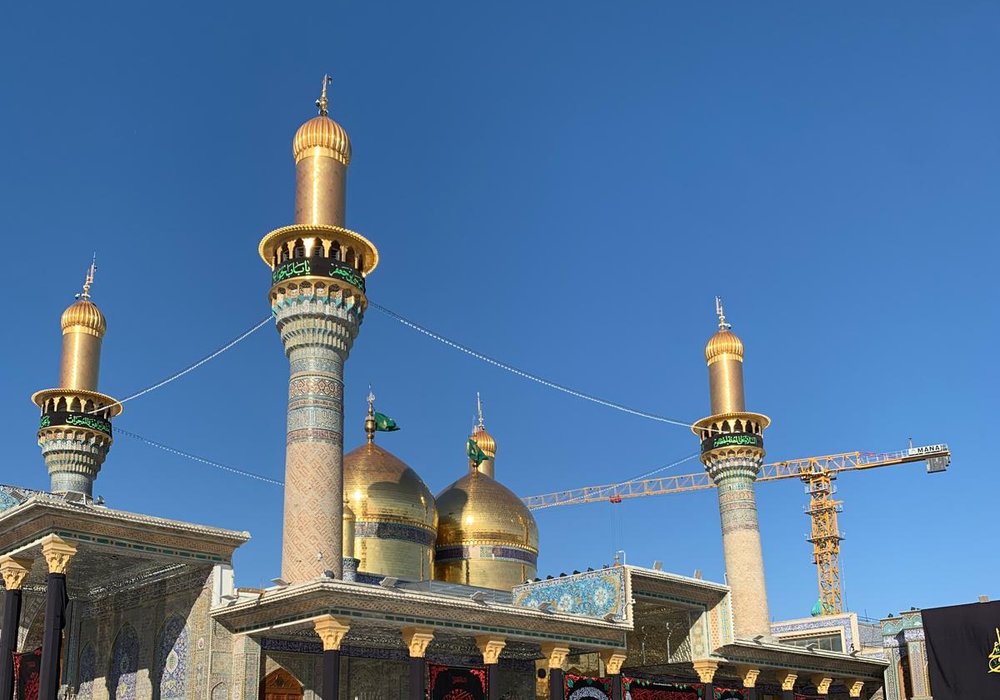
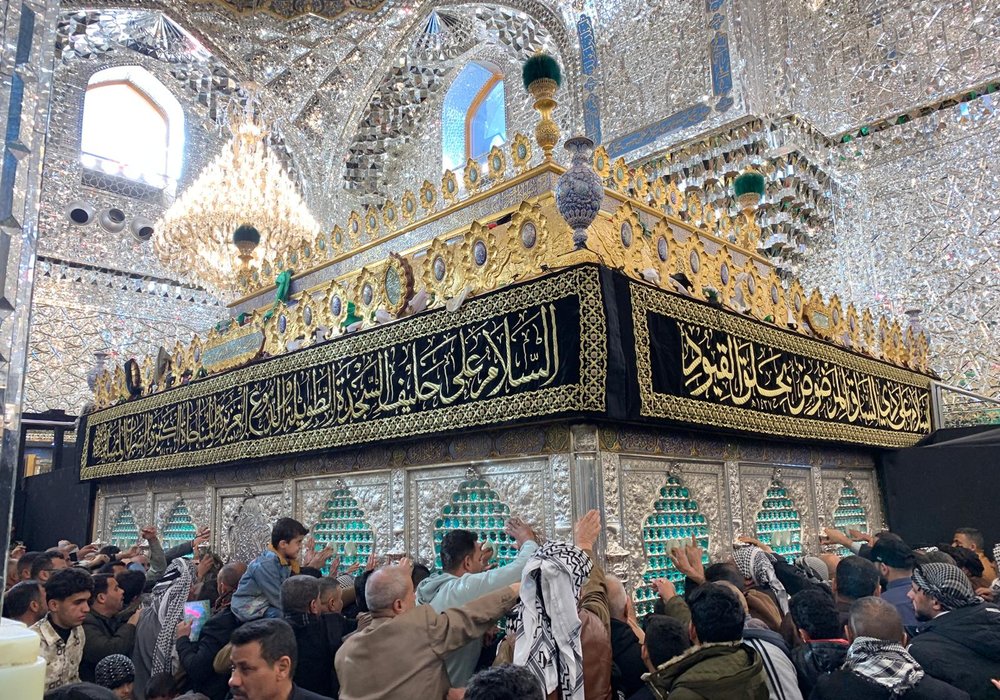
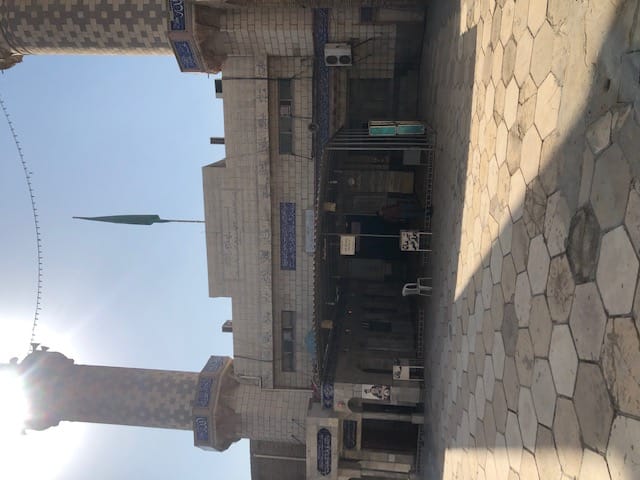
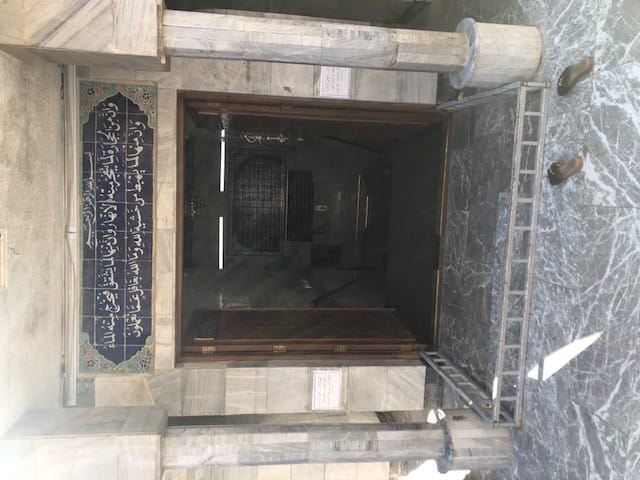
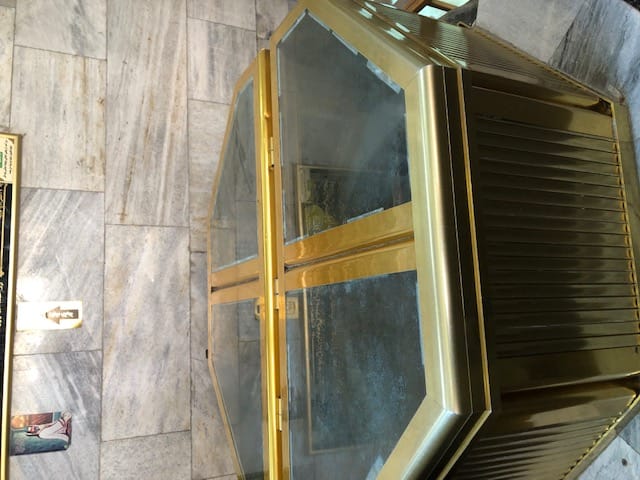
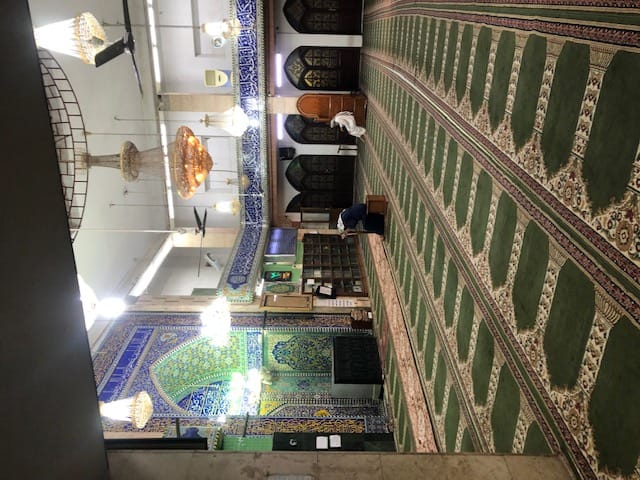
Masjid-e-Kufa — Shrine of Muslim ibn Aqeel & Hani ibn Urwa
Photo courtesy Miss Zahra Dawood

Masjid-e-Kufa — Shrine of Muslim ibn Aqeel & Hani ibn Urwa

Muslim ibn Aqeel (a.s.) was a first cousin of Imam Husayn (a.s.), sent by the Imam as his ambassador to Kufa to gauge the city's support before the tragedy of Karbala. He was sheltered by Hani ibn Urwa, a respected chieftain of Kufa, until both were betrayed and martyred by the Umayyad governor Ibn Ziyad on the 9th of Dhul-Hijjah — just days before Karbala. Their shrine sits within the premises of Masjid-e-Kufa itself, one of the earliest and most significant mosques in Islamic history.

Photo to be added

Grave of Mukhtar al-Thaqafi

Mukhtar al-Thaqafi rose up in Kufa to avenge the blood of Imam Husayn (a.s.), leading a campaign that brought the key perpetrators of Karbala — including Ibn Ziyad, Umar ibn Sa'd and Shimr — to justice. He based his uprising in Kufa and was killed in the city after eighteen months of rule. His grave lies beside Masjid-e-Kufa and remains a respected site for pilgrims.

Photo to be added

House of Imam Ali (a.s.)

Located just outside Masjid-e-Kufa, this is traditionally held to be the home where Imam Ali (a.s.) lived during his caliphate in Kufa, and from where he set out for Fajr prayer on the night he was struck by Ibn Muljim's sword.

Photo to be added

Masjid-e-Sahla

One of the most revered mosques in Kufa, Masjid-e-Sahla is associated with several Prophets and is widely held among Shia Muslims to be a future residence of Imam al-Mahdi (a.t.f.s.). Many pilgrims make a point of praying here and reciting supplications for the fulfilment of their needs.

Photo to be added

Tomb of Kumayl ibn Ziyad

A devoted companion of Imam Ali (a.s.), Kumayl ibn Ziyad is best remembered for narrating the famous Dua Kumayl, one of the most widely recited supplications in Shia tradition. His tomb lies on the way to Masjid-e-Sahla.

Photo to be added

Tomb of Meesam al-Tammar

A loyal companion of Imam Ali (a.s.) who was taught knowledge of the unseen by the Imam himself. Meesam al-Tammar was later martyred by the Umayyads for refusing to curse Imam Ali (a.s.), and his shrine lies a short distance from Masjid-e-Kufa.

Photo to be added

Masjid Hannana

Located on the road between Najaf and Kufa, Masjid Hannana marks the spot where, according to tradition, the head of Imam Husayn (a.s.) was rested during its journey to Damascus after Karbala.

Bibi Shareefa (s.a.)

Bibi Shareefa (s.a.) — Iraq

Among the blessed sites visited in the city of Hilla, Iraq, is the shrine attributed to Bibi Shareefa (s.a.), the noble daughter of Imam Hasan al-Mujtaba (a.s.). She was the wife of Imam Ali ibn al-Husayn Zayn al-Abidin (a.s.), the fourth Imam, and the mother of Imam Muhammad al-Baqir (a.s.), the fifth Imam — a lineage that made her son a Hashemi among the Hashemis, an Alawi among the Alawis, and a Fatimi among the Fatimis, joining two blessed branches of the Prophet's family.

Bibi Shareefa (s.a.) was known by the names Umm Muhammad and Umm Abdullah, and is mentioned in narrations with the honourable title "Al-Siddiqah" — the truthful and righteous one. Her elevated spiritual status is remembered through narrations from her son, Imam Muhammad al-Baqir (a.s.): it is reported that on one occasion, when a wall was about to collapse, she pointed towards it and, by the permission of Allah, it remained standing.

Bibi Shareefa (s.a.) was among the noble women of the family of Imam Husayn (a.s.) who witnessed the tragedy of Karbala. Following his martyrdom and that of his loyal companions on 10th Muharram, 61 AH, she was taken captive along with the surviving members of the Prophet's family, sharing the hardships of the journey from Karbala to Kufa and then to Damascus with courage and dignity.

A well-known local account describes the origin of the first structure built over her blessed grave during the Ottoman period. A tobacco merchant, fleeing from the authorities with sacks of tobacco, took refuge in the humble palm-branch shelter marking her grave, and vowed that if Allah saved him from trouble, he would build a proper shrine with a dome over it. When the authorities questioned him about the sacks, he claimed they held sesame seeds — and on inspection, they did. Recognising this as a blessing through her honour, he fulfilled his vow and built the first known shrine at the site.

Today, pilgrims stand before the shrine and send their salutations: "Peace be upon you, O Bibi Shareefa, daughter of Imam Hasan al-Mujtaba. May Allah grant us the honour of following the path of Muhammad and his purified family."

  1. Daughter of Imam Hasan al-Mujtaba (a.s.), wife of Imam Ali Zayn al-Abidin (a.s.), and mother of Imam Muhammad al-Baqir (a.s.)
  2. Known by the names Umm Muhammad, Umm Abdullah, and the title Al-Siddiqah
  3. Present during the tragedy of Karbala and taken captive with the family of Imam Husayn (a.s.) on the journey to Kufa and Damascus
  4. Shrine located in Hilla, Babylon Province, Iraq — also known locally as Al-Uluwiyyah Al-Shareefah

Historical researchers have discussed the exact identification of the person buried at this location. While there is no definitive historical evidence confirming the grave with complete certainty, there is also no conclusive evidence disproving that it belongs to the noble daughter of Imam Hasan al-Mujtaba (a.s.). For centuries, this shrine has remained a place of love, respect and devotion for followers of Ahl al-Bayt (a.s.).

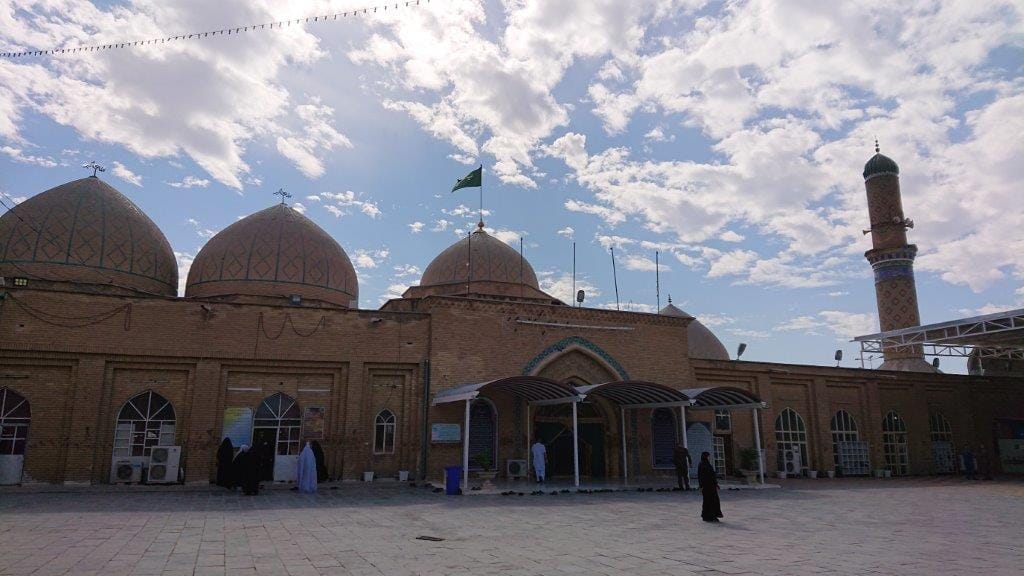
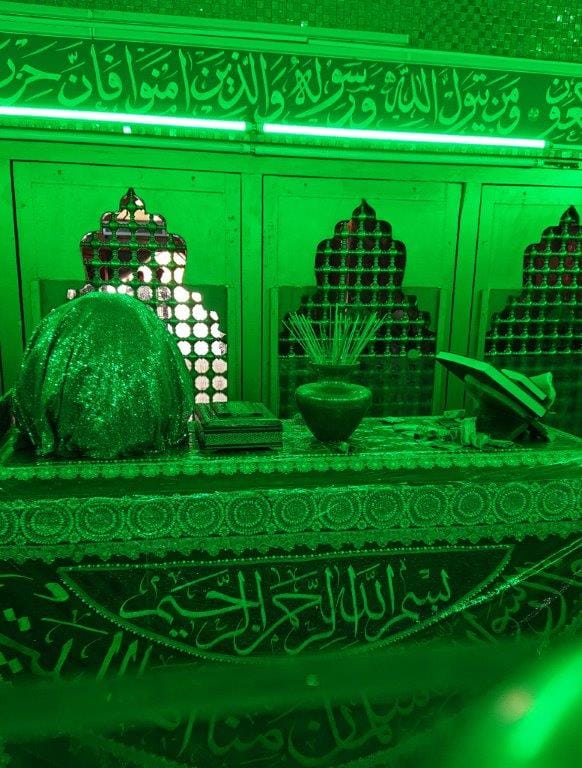
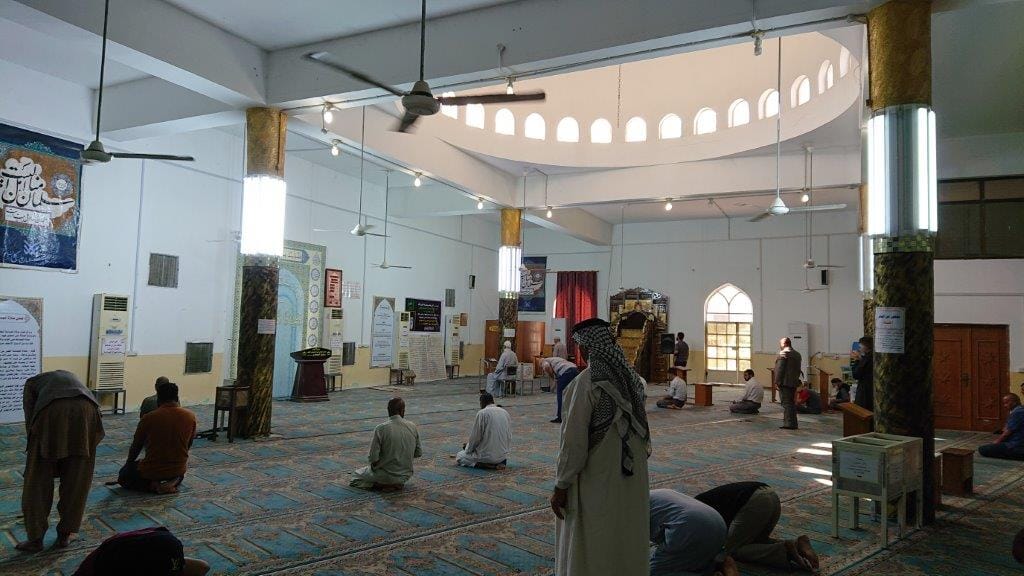
Masjid Buratha — Iraq

Situated on the road between the Al-Kadhimayn Shrine and central Baghdad, Masjid Buratha is regarded in Shia tradition as one of Iraq's most sacred mosques — though relatively few pilgrims stop to visit it on their way to the shrines.

According to the medieval historian Yaqut al-Hamawi, Buratha was originally a village before Baghdad was founded. The mosque later became associated with Shia worship and underwent periods of destruction and reconstruction during the Abbasid era due to political and sectarian tensions. Shia traditions also relate that Imam Ali ibn Abi Talib (a.s.) stopped here on his march to the Battle of Nahrawan, prayed in the mosque, and stayed there for several days.

  1. Believed to be a site where only the armies of a Prophet, or the successor of a Prophet, ever camped
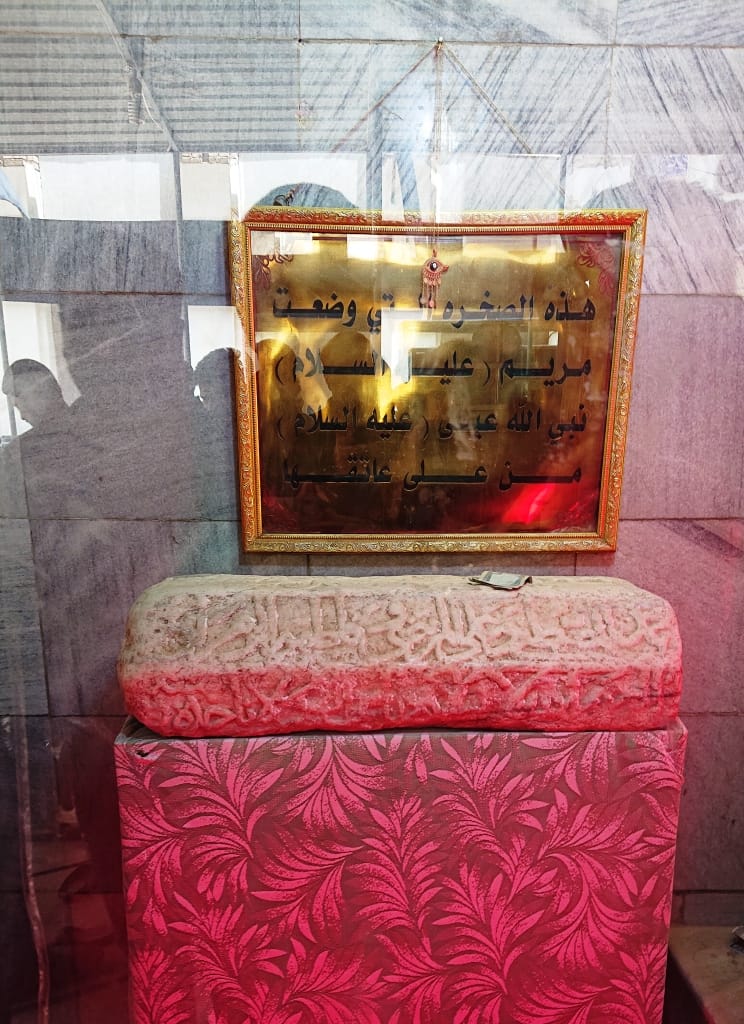
  2. Traditionally held to have been the home of Maryam (a.s.)
  3. Traditionally held to have been the residence of Isa (a.s.)
  4. Said to contain the miraculous spring provided for Maryam (a.s.)
  5. Imam Ali (a.s.) is said to have miraculously revealed that spring
  6. Said to hold a blessed white rock upon which Maryam (a.s.) placed the infant Isa (a.s.)
  7. Imam Ali (a.s.) positioned that rock toward the qiblah and prayed behind it
  8. Imam Ali (a.s.), Imam Hasan (a.s.) and Imam Husayn (a.s.) all prayed there
  9. Imam Ali (a.s.) is said to have stayed there for four days
  10. Many prophets, especially Ibrahim (a.s.), are said to have prayed there
  11. Traditionally said to contain, or lie adjacent to, the grave attributed to Prophet Yusha (Joshua) (a.s.)
  12. Identified in tradition as one of the places where the miracle of Radd al-Shams (the return of the sun) for Imam Ali (a.s.) occurred

Many of these virtues are preserved in Shia devotional literature and historical narrations. Their historical authenticity varies, and not all are universally accepted by historians or across Islamic schools of thought — but for pilgrims, these traditions remain part of the mosque's profound spiritual significance.

Mada'in — Shrine of Salman al-Muhammadi — Iraq

Approximately 30 miles (50km) from Baghdad, our journey through the historic city of al-Mada'in centres on the blessed shrine of Salman al-Muhammadi (Salman al-Farsi) — one of the greatest companions of the Holy Prophet (s.a.w.w.). Due to time limitations, our group's ziarat focuses primarily on Salman al-Muhammadi; the other blessed personalities resting within the same complex are introduced below as background only, and are not part of the planned visit.

Salman holds a unique position among the companions of the Holy Prophet (s.a.w.w.). His closeness to the Prophet was so profound that the Prophet famously declared, "Salman is from us, the Ahl al-Bayt." This honour placed Salman among those closest to the Household of the Prophet despite him not being from the Prophet's family by lineage — his faith, knowledge, sincerity and devotion earned him a position unlike any other companion. The Prophet also described him: "Salman is an ocean that cannot be exhausted and a treasure that cannot be depleted. Salman is from us, the Ahl al-Bayt; he has been granted wisdom and understanding." Imam Ali (a.s.) compared Salman's wisdom to that of Luqman the Wise, and Imam Ja'far al-Sadiq (a.s.) said: "Salman attained the knowledge of the beginning and the knowledge of the end. He is an endless ocean, and he is from us, the Ahl al-Bayt."

One of the greatest signs of Salman's rank was the honour he received after his passing. When Salman passed away in al-Mada'in, Imam Ali (a.s.) travelled miraculously from Madinah to attend his funeral — personally performing the ritual washing and shrouding, leading the funeral prayer, with angels present at his final farewell. This event reflects the extraordinary love, loyalty and spiritual connection between Salman and the Ahl al-Bayt.

Near the shrine stand the famous remains of Taq Kisra, the palace of the Persian emperor Khosrow I — a reminder of the rise and fall of worldly kingdoms. It is reported that when Imam Ali (a.s.) visited al-Mada'in, he offered prayers near this palace and reflected on the temporary nature of worldly power, reminding those present of the Qur'anic verses: "How many gardens and springs did they leave behind, and fields of crops and noble places, and comforts in which they delighted. Thus We made another people inherit them." (Surah Ad-Dukhan, 44:25-28)

  1. Possessed exceptional knowledge and wisdom granted by Allah
  2. Reached the highest levels of faith and certainty
  3. Had a deep connection with the unseen knowledge granted by Allah
  4. Was among those beloved by Allah, His Messenger and the Ahl al-Bayt
  5. Received special teachings from the Holy Prophet (s.a.w.w.) and Imam Ali (a.s.)

Also resting within this complex (background — not part of the planned visit)

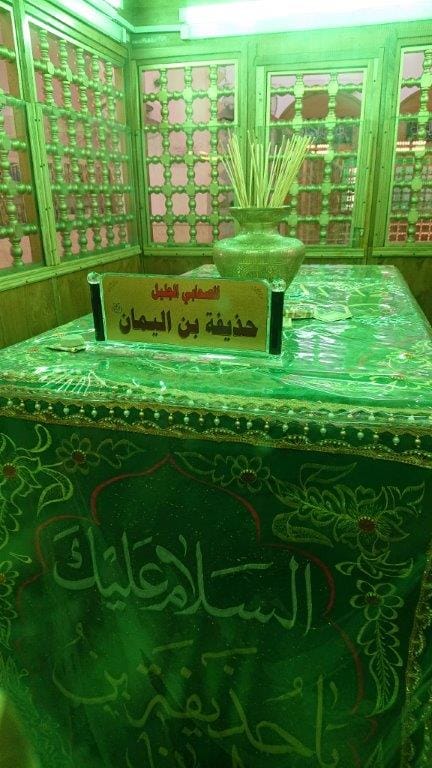
Hudhayfah ibn al-Yaman

A distinguished companion of the Holy Prophet (s.a.w.w.), known for his exceptional spiritual insight and entrusted with special knowledge — famously knowing the identities of the hypocrites. A devoted supporter of Imam Ali (a.s.), he served as governor of al-Mada'in and passed away in the city. His final advice to his son included: "Show no desire for what people possess, for true richness lies in this. Do not ask from people, for that is the greatest poverty. Try to be better today than you were yesterday."

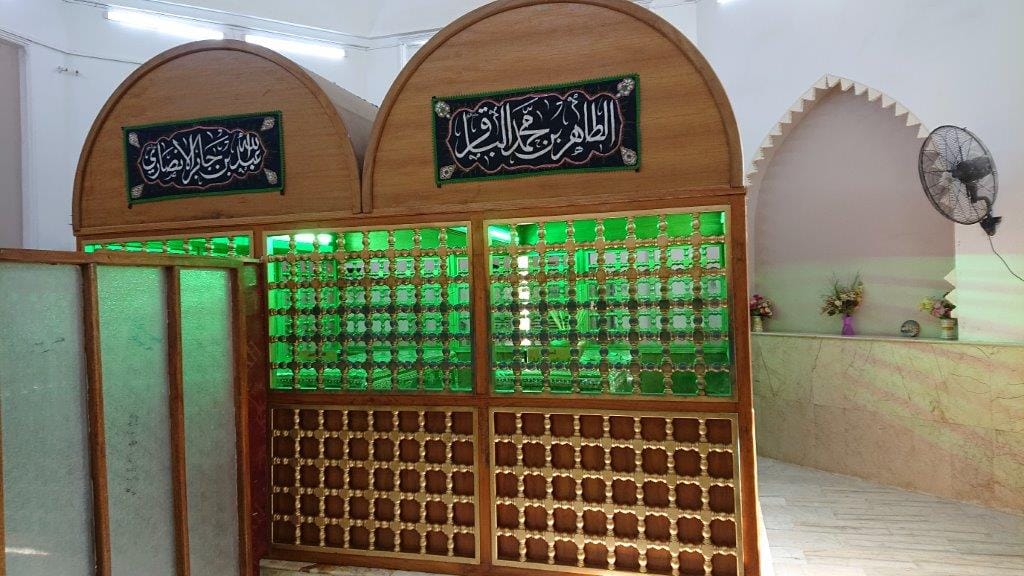
Tahir ibn Muhammad al-Baqir (a.s.)

Son of Imam Muhammad al-Baqir (a.s.), the fifth Imam of the Ahl al-Bayt. His burial place within Mada'in is among the honoured sites associated with the family of the Prophet.

Abdullah ibn Jabir al-Ansari

A respected companion of the Holy Prophet (s.a.w.w.) who narrated many traditions and remained connected to the teachings of Islam's earliest generation.

The journey to Mada'in is not merely a visit to historical landmarks — it is an opportunity to connect with the legacy of individuals whose lives represented faith, knowledge, sacrifice and devotion to Allah and the Ahl al-Bayt. As we stand beside the resting place of Salman al-Muhammadi, we remember the words of the Prophet: "Salman is from us, the Ahl al-Bayt."

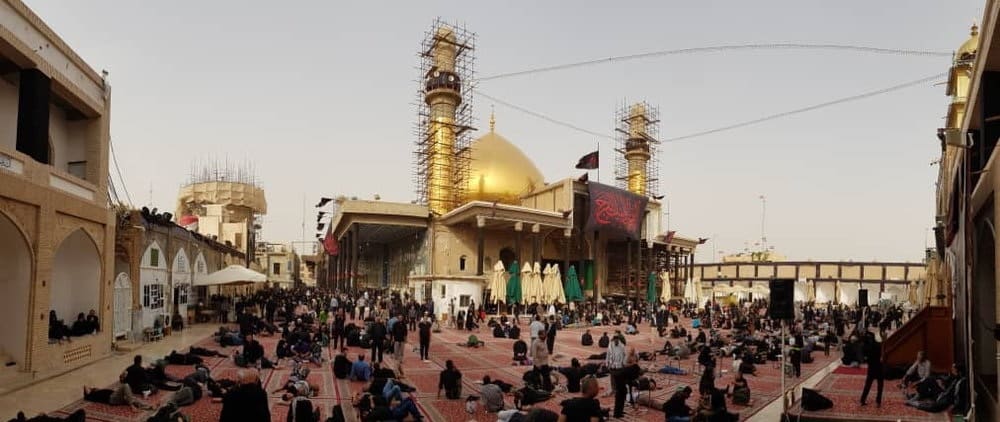
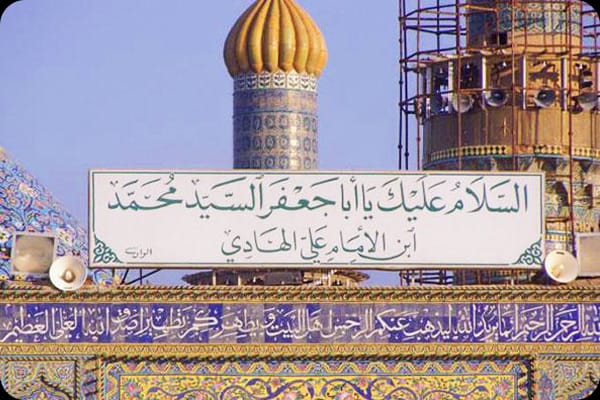
Al-Sayyid Muhammad ibn Imam Ali al-Hadi (a.s.) — Balad

Al-Sayyid Muhammad ibn Imam Ali al-Hadi (a.s.) — Balad — Iraq

Among the hidden spiritual treasures of Iraq is the blessed shrine of Al-Sayyid Muhammad ibn Imam Ali al-Hadi (a.s.), located in the town of Balad, approximately 50km south of Samarra. Revered by generations of believers, his shrine has become a place of heartfelt devotion, where pilgrims seek nearness to Allah through his noble status and pray for the fulfilment of their needs.

Born in 228 AH (842-843 CE), Abu Ja'far Muhammad — affectionately known as Al-Sayyid Muhammad — was the eldest son of Imam Ali al-Hadi (a.s.). He possessed such outstanding piety, knowledge, humility and noble character that many of the Shia of his time believed he would succeed his father as the next Imam. However, Allah had decreed otherwise: Al-Sayyid Muhammad passed away during his father's lifetime, in 252 AH (866 CE), making clear that the Imamate would continue through his younger brother, Imam Hasan al-Askari (a.s.).

His passing deeply affected the household of the Ahl al-Bayt (a.s.). Historical narrations mention that Imam Hasan al-Askari (a.s.) was overcome with grief and tore his shirt in mourning — reminding those present that Prophet Musa (a.s.) had likewise torn his garment upon the passing of his brother, Prophet Harun (a.s.), showing that expressing profound grief for the righteous is part of the tradition of the Prophets. It is narrated that Imam Ali al-Hadi (a.s.) then appointed Imam Hasan al-Askari (a.s.) as the next Imam, saying: "Renew your thanks to Allah, for He has now ordained a new decree concerning you" — affirming the divine succession of the Imamate.

Although Al-Sayyid Muhammad did not become Imam, his lofty spiritual rank remained unquestioned. He became renowned for his righteousness, sincerity and closeness to Allah, and countless pilgrims have reported experiencing karamat (acts of divine grace) through his intercession by Allah's permission. Among the local people he is affectionately known as Sabu' al-Dujayl — "The Lion of Dujayl" — a title reflecting the immense respect in which he is held, and the Arab tribes of the region have honoured his shrine for centuries.

The renowned scholar Shaykh Husayn al-Nuri (Muhaddith al-Nuri) held exceptional reverence for Al-Sayyid Muhammad and personally contributed to the development of his shrine, arranging for an inscription upon the blessed tomb: "This is the tomb of the sublime Sayyid Abu Ja'far Muhammad, the son of Imam Abu'l-Hasan Ali al-Hadi (a.s.), a person of great honour and lofty rank."

Today, the shrine remains one of Iraq's most beloved ziyarat destinations. Pilgrims visiting Samarra often include Balad in their journey, finding in this sacred sanctuary a place of tranquillity, hope and heartfelt supplication — a visit that is not only a journey through history, but an opportunity to reflect on unwavering faith and submission to the Divine Will.

  1. Born 228 AH (842-843 CE), eldest son of Imam Ali al-Hadi (a.s.)
  2. Passed away in 252 AH (866 CE), during his father's lifetime
  3. Known locally as Sabu' al-Dujayl — "The Lion of Dujayl"
  4. It is tried and attested by many that a sacrifice made at his shrine, with a wish in mind, is fulfilled in due time
Syria
Wikimedia Commons contributor, CC licensed

Syria — SyriaProspective destination

The shrine of Sayyida Zaynab (s.a.), daughter of Imam Ali (a.s.), in Damascus.

Not currently part of our tours due to access restrictions — a place we hope to return to in the future.